
Why Kibbe Self Typing Is Often Wrong: Common Mistakes and How to Avoid Them
Discover why Kibbe self typing is often wrong and learn the most common mistakes people make. Get practical tips to improve your accuracy and find your true Kibbe type.
Have you ever taken a Kibbe quiz, read your result, and thought, "This does not feel right"? Or perhaps you have typed yourself as one type, only to realize months later that everything you believed was wrong? You are not alone. Why Kibbe self typing is often wrong is a frustration shared by thousands of people exploring the system.
The truth is, self-typing is one of the hardest parts of the Kibbe journey. Unlike measuring your height or shoe size, identifying your Kibbe Image ID requires objectivity, abstract thinking, and a deep understanding of concepts that are not intuitive. Most people get it wrong on their first—or even fifth—attempt.
But here is the good news: understanding why self-typing fails can help you avoid the most common pitfalls and find your true type faster. In this guide, we will break down the reasons Kibbe self typing mistakes happen and show you how to approach the process with more accuracy. If you want a structured starting point, our Kibbe Body Type Quiz can help guide you through the assessment objectively.
Let us explore why self-typing is so challenging—and what you can do about it.
If your main question is no longer "why is this hard?" but "what should I do next?", try the Kibbe Type Troubleshooter for a second opinion between close candidates.

Why Self-Assessment Is the Hardest Part of Kibbe
Before we dive into specific mistakes, it is important to understand the fundamental problem: we are terrible at seeing ourselves objectively.
The Mirror Problem
When you look in a mirror, you do not see yourself as others see you. You focus on specific features—the ones you like or dislike most intensely. You compare yourself to mental ideals. You cannot step back and view your overall proportions the way a stranger would in a split-second first impression.
This lack of objectivity is why David Kibbe himself has said that only he can definitively type someone. While most of us cannot fly to New York for a personal consultation, we can at least acknowledge this limitation and compensate for it.
Abstract Concepts, Concrete Confusion
The Kibbe system uses terminology that sounds familiar but has very specific meanings:
| Term | Common Understanding | Kibbe Definition |
|---|---|---|
| Vertical | Being tall | The impression of elongation in your silhouette |
| Width | Being heavy or overweight | Horizontal bone structure (broad shoulders, blunt bones) |
| Curve | Having curves from weight | Rounded flesh that creates an hourglass or figure-eight shape |
| Petite | Being short | Compactness in stature combined with small bone structure |
When beginners use their everyday understanding of these words, they inevitably mistype themselves. Someone who has gained weight might think they have "curve," when in Kibbe terms, their bone structure is actually angular. Someone tall might assume they have "vertical," when their proportions actually appear moderate.
The 7 Most Common Kibbe Self Typing Mistakes
Understanding why Kibbe self typing is often wrong requires looking at specific patterns. Here are the most frequent errors people make—and how to avoid them.
Mistake 1: Confusing Weight With Bone Structure
The Problem: This is arguably the most common mistyping mistake. When people gain weight, they often assume they must be a "softer" type like Romantic or Soft Natural. But Kibbe typing is based on your skeleton, not your current weight.
Your bone structure does not change when you gain or lose 20 pounds. A Dramatic with extra weight is still a Dramatic. A Flamboyant Gamine carrying more flesh is still a Flamboyant Gamine.
The Fix: When assessing yourself, focus on your bones first:
- Look at your wrists, ankles, hands, and feet. Are they narrow and delicate, or wider and more substantial?
- Examine your shoulders. Are they sharp and angular, blunt and broad, or sloped and rounded?
- Check your facial bones. Is your jawline angular, blunt, or softly rounded?
Your flesh (muscle and fat) sits on top of your bones, but it is the underlying structure that determines your type.
Mistake 2: Misunderstanding "Vertical Line"
The Problem: Many people equate vertical line with actual height. They think, "I am 5'8", so I must have vertical." Or conversely, "I am 5'2", so I cannot have vertical."
In Kibbe, vertical is about how tall you appear, not how tall you measure. A 5'3" woman with long limbs and a narrow silhouette might have significant vertical. A 5'7" woman with moderate proportions might not.
The Fix: Take a full-length photo from chest height, standing naturally. Look at the overall impression without focusing on individual features. Do you appear elongated even if you are not tall? Do you appear compact even though you are average height?
Better yet, ask someone who has never seen you before: "Do I look tall or short at first glance?"
Mistake 3: Typing Based on Face Alone
The Problem: Kibbe considers the whole body, not just the face. Yet many people type themselves based primarily on facial features—soft lips, angular jaw, delicate nose. While facial features contribute to your overall Image ID, they are not the primary determinant.
The Fix: David Kibbe has moved away from detailed facial analysis in recent years. Focus on your body's bone structure, flesh distribution, and vertical line first. Facial features are supporting evidence, not the main event.
Mistake 4: Seeing What You Want to See
The Problem: We all have types we are attracted to or that we think represent our style goals. Maybe you love the dramatic, commanding presence of Dramatic types. Or perhaps you relate to the softness description of Romantic.
This desire can unconsciously bias your self-assessment. You see your moderate shoulder width as "broad" because you want to be a Natural. You interpret your bones as "delicate" because you want to be a Romantic.
The Fix: Remember that every Kibbe type is beautiful and has its own strengths. There is no hierarchy. Try to approach typing as a fact-finding mission rather than an identity quest. What is your bone structure, objectively? Not what would you prefer it to be.
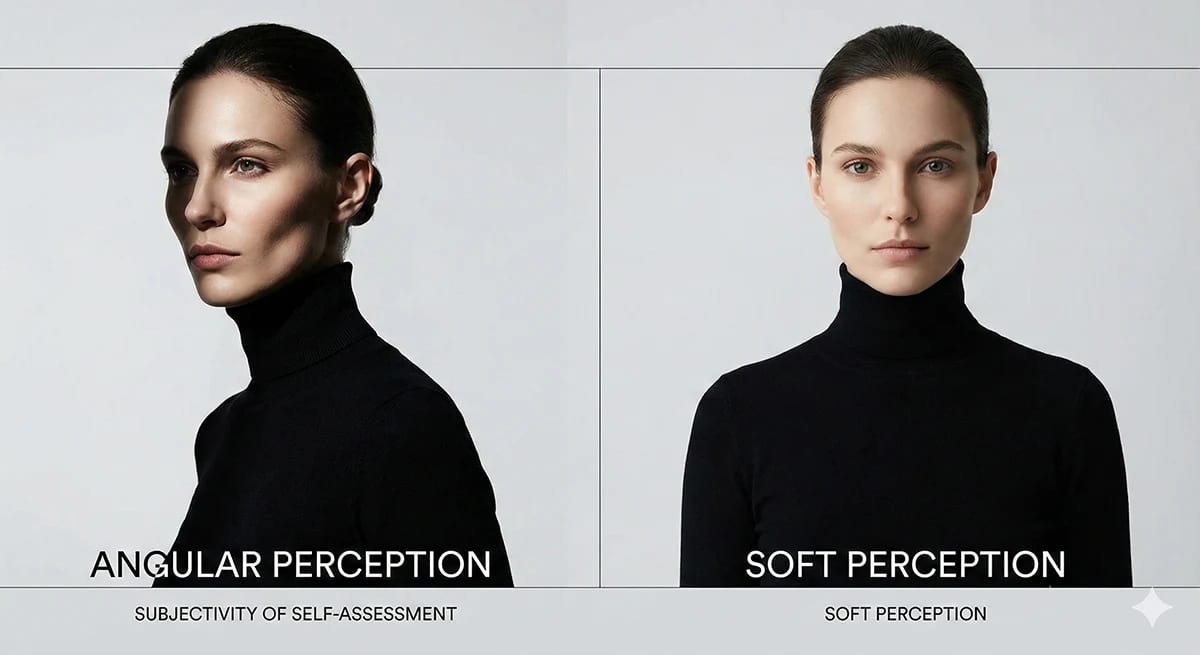
Mistake 5: Ignoring Your Dominant Characteristic
The Problem: Many people get lost in the details and forget to identify their most prominent feature. Kibbe typing is about what accommodation your body needs first. Do you need to accommodate vertical? Width? Curve? Petite proportions?
When you try to balance every minor feature equally, you end up confused between multiple types with no clear answer.
The Fix: Ask yourself: "What is the first thing someone would notice about my body from across a room?" Is it your length? Your broadness? Your delicate proportions? Your curves?
That dominant impression is usually your primary accommodation, and it points you toward your Kibbe family.
If you are struggling to identify this, our Kibbe Body Type Quiz is designed to help you work through these questions systematically.
Mistake 6: Relying Too Heavily on Celebrity Comparisons
The Problem: Celebrity examples are often used to illustrate Kibbe types, but they can be misleading. Celebrities are professionally styled, lit, and photographed to look their best. Red carpet photos, in particular, can distort natural proportions.
Additionally, many celebrity typings within the community are disputed. Using a possibly-mistyped celebrity as your reference point compounds the problem.
The Fix: Use celebrity examples as loose inspiration, not definitive evidence. If you see a celebrity listed as your potential type, do not assume you are that type just because you think you look similar. Instead, focus on clothing lines: does your potential type's recommended silhouette actually flatter you?
Mistake 7: Not Validating Through Clothing
The Problem: Perhaps the biggest mistake is treating the quiz result or self-assessment as the final answer. Many people type themselves, read the descriptions that match their result, and stop there—without ever testing whether the recommended clothing actually works.
This is like diagnosing yourself with a condition based on internet symptoms without ever seeing a doctor or trying treatment.
The Fix: Your typing is a hypothesis, not a conclusion. The real test is: do your type's recommended silhouettes, fabrics, and details look and feel harmonious on you?
If the clothes do not work, your typing may be wrong. If they do work, you have found your match.
Signs You Are Likely Mistyped
Not sure if your current typing is correct? Here is a quick checklist of warning signs:
Red Flags That Suggest Mistyping:
- ☐ You constantly adjust or "break" your type's recommendations to make them work
- ☐ You avoid key silhouettes of your type because they feel wrong
- ☐ People consistently describe you differently than your typed result suggests
- ☐ Outfits "work on paper" but look off in practice
- ☐ You have retyped yourself multiple times with no satisfying answer
- ☐ Your type's celebrity examples look nothing like you in real life
If you check more than two of these boxes, it may be worth revisiting your assessment—or trying our structured quiz for a fresh perspective.
Common Mistyping Patterns: Where People Go Wrong
Certain mistakes lead to predictable mistyping patterns. Understanding these can help you identify where you might have gone astray:
| Common Mistake | Often Mistyped As | Actually Likely |
|---|---|---|
| Confusing weight with curve | Romantic | Soft Natural or Soft Classic |
| Equating height with vertical | Dramatic | Flamboyant Natural or Classic |
| Typing based on face alone | Gamine types | Soft Classic or Theatrical Romantic |
| Seeing desired traits | Any "aspirational" type | Various—requires objective reassessment |
If you repeatedly mistype between the Natural and Classic families, focus on whether your dominant characteristic is width (Natural) or balance (Classic). If you swing between Romantic and Gamine types, consider whether your frame is truly petite or just delicate.
How to Avoid Mistyping Kibbe: A Better Approach
Now that you understand why Kibbe self typing is often wrong, here is a more systematic approach to finding your type accurately.
Step 1: Learn the System First
Before typing yourself, spend time learning what Kibbe concepts actually mean. Read about vertical, width, curve, and bone structure. Study the differences between families (Dramatic, Natural, Classic, Romantic, Gamine). The more you understand, the better your self-assessment will be.
Our Kibbe Body Types Chart provides a visual overview of all 13 types and their characteristics.
Step 2: Gather Objective Evidence
Take full-length photos in form-fitting, neutral clothing. Stand naturally, not posed. Ask friends or family members for their honest impressions. Compare your proportions against neutral backgrounds where nothing is exaggerated.
Step 3: Use Structured Tools
A well-designed quiz breaks down abstract concepts into concrete questions. It forces you to answer systematically rather than jumping to conclusions. Our Kibbe Body Type Quiz guides you through this process step by step.
Step 4: Narrow Down, Then Test
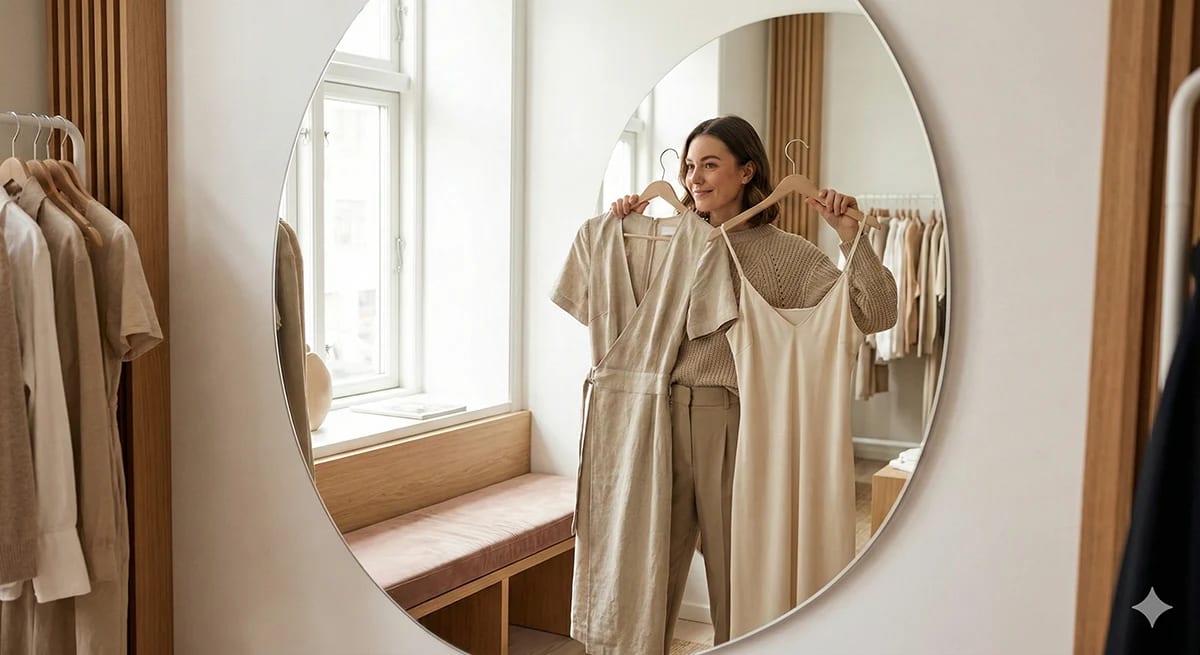
Based on your research and quiz results, narrow down to 2-3 potential types. Then experiment with clothing recommendations from each. Which silhouettes genuinely flatter you? Which feel natural and harmonious? Which look wrong even though "on paper" they should work?
Step 5: Be Patient and Iterate
Finding your Kibbe type is not a one-time event. It is a process that can take weeks, months, or even years to refine. That is okay. The goal is not speed—it is accuracy and genuine understanding.
Tips for Getting Accurate Kibbe Results
Here are practical strategies to improve your self-typing accuracy:
Be Brutally Honest
This is not about vanity or self-flattery. Answer questions based on what is, not what you wish were true. If your bones are broad, acknowledge it. If you are short-waisted, own it. Objectivity is your greatest tool.
Get Outside Perspectives
Ask people who do not know the Kibbe system to describe your proportions. Their unbiased first impressions can be more accurate than your overthought self-analysis.
Study Similar Types Side-by-Side
If you are torn between two types, research both thoroughly. Look at the clothing recommendations for each. Often, the differences in suggested silhouettes will clarify which one actually suits you.
Common confusion pairs include:
- Soft Natural vs. Romantic — Both have softness, but Naturals have width while Romantics have double curve
- Soft Classic vs. Theatrical Romantic — Both appear moderate, but SC prioritizes balance while TR accommodates curve
- Dramatic vs. Flamboyant Natural — Both have vertical, but Dramatics are narrow while FNs have width
Trust Your Gut After Testing
If you have genuinely tested your type's clothing recommendations and they just do not work, trust that feeling. A type result that looks right on paper but wrong in practice is not your type.
Related Resources on This Site
If you are working through Kibbe self typing mistakes and want more guidance, these resources can help:
- Take the Free Kibbe Body Type Quiz — A structured assessment that guides you through the typing process objectively, reducing common errors.
- Kibbe Body Types Chart — Compare all 13 types visually to understand the differences between families and subtypes.
- Is Kibbe Body Typing Accurate? — A balanced look at the system's strengths and limitations, helping you set realistic expectations.
- How to Know Your Kibbe Body Type — A comprehensive guide to the assessment process, including tips for improving accuracy.
Common Questions About Kibbe Self Typing Mistakes
Why is Kibbe self typing so difficult? ▼
What is the most common Kibbe mistyping mistake? ▼
Can you be between two Kibbe types? ▼
How do I know if I mistyped myself in Kibbe? ▼
Should I trust online Kibbe typing from strangers? ▼
How long does it take to find your correct Kibbe type? ▼
Conclusion: Self-Typing Is Hard, But Not Impossible
Why Kibbe self typing is often wrong comes down to a few core issues: we lack objectivity about ourselves, we misunderstand the system's terminology, and we often skip the validation step of actually testing clothing recommendations.
But understanding these pitfalls puts you ahead of most people. By learning the system properly, gathering objective evidence, using structured tools, and patiently testing your results, you can dramatically improve your typing accuracy.
Remember: finding your Kibbe type is a journey, not a destination. There is no shame in getting it wrong at first—many experienced Kibbe enthusiasts have retyped themselves multiple times. What matters is staying curious, staying objective, and staying willing to learn.
If you are ready to approach the process more systematically, our Kibbe Body Type Quiz offers a structured starting point. And if your results feel uncertain, explore similar types on our Kibbe Body Types Chart to compare and contrast.
The right type is out there. With patience and the right approach, you will find it.