
How to Dress the Classic Kibbe Body Type: Master Timeless Elegance
Learn how to dress the Classic Kibbe body type with practical outfit ideas, best fabrics, silhouettes, and styling rules that honor your perfectly balanced lines.
If your reflection shows symmetrical proportions, evenly balanced features, and a moderate frame that feels neither sharp nor soft, you may be a Classic Kibbe Body Type.
In the Kibbe system, the Classic is defined by perfect yin-yang balance—the epitome of moderation and timeless elegance. If you're searching for how to dress the Classic Kibbe body type, this guide provides clear rules, fabric choices, and real outfit ideas that work for everyday life.
Not sure if you're a Classic?
Take our free Kibbe body type quiz or read the full Classic profile to confirm your body type.

At a Glance: Classic Styling Essentials
Here's a quick reference for what works best (and what doesn't) for the Classic Kibbe body type:
| Element | Best for Classic | What to Avoid |
|---|---|---|
| Silhouette | Balanced, tailored, streamlined | Extreme, dramatic, oversized |
| Lines | Clean, straight, symmetrical | Asymmetrical, broken, exaggerated |
| Fabrics | Medium-weight, smooth, quality textiles | Stiff heavy fabrics, overly soft drapey materials |
| Details | Refined, minimal, elegant | Excessive ornamentation, avant-garde elements |
| Patterns | Classic prints, subtle geometrics, solids | Loud patterns, clashing prints, trendy designs |
| Essence | Timeless, polished, sophisticated | Casual, edgy, overly decorated |
1. What Is the Classic Body Type?
The Classic represents the ideal of perfect balance in the Kibbe system. While other types lean toward yin (soft, rounded) or yang (sharp, angular), the Classic exists in harmonious equilibrium.
Key Characteristics:
- Balanced Bone Structure: Your shoulders, hips, and waist exist in symmetrical proportion—neither wide nor narrow, neither sharp nor rounded.
- Moderate Height: Typically 5'4" to 5'7", though the visual impression of balance matters more than exact measurements.
- Even Features: Your facial features are symmetrical and moderate—nothing is exaggerated or extreme.
- Moderate Flesh: Neither overly soft nor angular—your body has a smooth, even quality.
Understanding this is crucial because your clothes need to maintain this natural harmony. You're not creating drama or softness; you're preserving and enhancing your inherent balance.
Not completely sure you're a Classic?
Take the free Kibbe body type quiz to discover your true type.
Classic vs Soft Classic vs Dramatic Classic: Quick Comparison
Many people wonder where they fall within the Classic family. Here's a quick test to help you distinguish between the three:
- Pure Classic: Perfect yin-yang balance. You need clean, moderate tailoring with no added sharpness or softness. Extremes in either direction feel "off."
- Soft Classic: Classic balance with a soft yin undercurrent. You need gentle curves, slightly softer fabrics, and rounded edges in your tailoring. Sharp angles feel harsh on you.
- Dramatic Classic: Classic balance with a sharp yang undertone. You need crisper tailoring, defined lines, and more angular silhouettes. Too-soft fabrics look limp on you.
Quick self-check:
- If stiff, angular pieces feel too harsh → lean toward Soft Classic
- If soft, draped pieces look shapeless → lean toward Dramatic Classic
- If both extremes feel wrong and you need pure moderation → you're likely Pure Classic
For a detailed breakdown, explore our Soft Classic style guide or compare all types on the body type chart.
2. The Golden Rules of Classic Styling
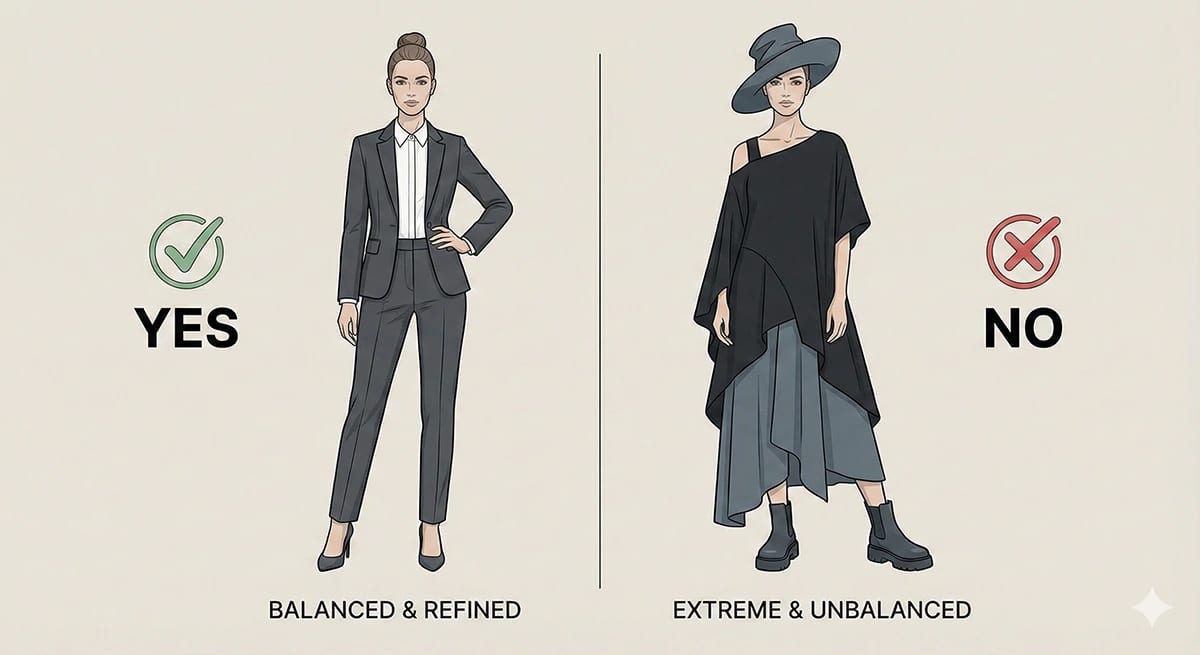
To truly shine as a Classic, your clothing must honor your natural balance and symmetry.
Rule #1: Preserve Proportion and Symmetry
Your body is perfectly proportioned; your clothes should reflect that.
- Do: Choose pieces with balanced hemlines, even shoulder lines, and proportional cuts.
- Don't: Wear asymmetrical designs, uneven hemlines, or pieces that create visual imbalance.
Rule #2: Choose Quality Over Quantity
Classic elegance comes from refined, well-made pieces.
- Do: Invest in quality fabrics that hold their shape—structured cottons, smooth wools, quality silk.
- Don't: Wear cheap, poorly constructed garments or overly trendy fast-fashion pieces.
Rule #3: Maintain Clean Lines
Your styling should be streamlined and uncluttered.
- Do: Opt for tailored silhouettes with clean edges, minimal seams, and refined details.
- Don't: Add excessive embellishments, busy patterns, or too many competing elements.
Rule #4: Avoid Extremes
The Classic thrives in moderation—avoid anything too much or too little.
- Do: Stay in the middle ground—moderate heels, balanced proportions, subtle elegance.
- Don't: Go for extreme stilettos, oversized silhouettes, dramatic makeup, or avant-garde styling.
3. Best Fabrics for the Classic
Fabric choice is essential for Classics. The right fabric will maintain structure while looking refined and polished.
Best Fabrics:
- Quality cotton (broadcloth, poplin) - Smooth, structured, timeless
- Lightweight to medium-weight wool - Holds shape beautifully, elegant drape
- Silk and silk blends - Refined, smooth, sophisticated sheen
- Gabardine and twill - Structured, clean lines, professional
- Cashmere and fine knits - Elevated, quality texture
Textures That Work:
- Smooth, even surfaces
- Subtle sheen without being flashy
- Medium-weight fabrics with body
- Fine, quality weaves
Fabrics to Avoid:
- Overly stiff or heavy materials (heavy brocade, rigid leather)
- Extremely soft, drapey fabrics (heavy jersey, flowing chiffon)
- Rough, chunky textures (bulky knits, heavy tweed)
- Cheap or synthetic-looking materials
The key is refined quality with moderate structure—fabrics that look expensive, hold their shape, and create clean lines.
4. Item-by-Item Styling Guide
For more detailed styling inspiration, explore the complete Classic style guide.
Tops & Blouses
Look for refined structure with clean lines.
- Necklines: Classic crew necks, tailored V-necks, modest boat necks, refined collars
- Details: Minimal, elegant—subtle darts, clean button plackets, refined seams
- Fit: Fitted but not tight—following your body's natural lines without clinging
- Best Styles: Crisp button-down shirts, quality silk blouses, fine-knit sweaters, tailored shells
What to Skip: Overly ruffled tops, extreme cuts (very high or very low necklines), heavily embellished pieces, shapeless or oversized styles
Skirts & Dresses
These are often the easiest staples for a Classic to master.
- Dresses: Sheath dresses (the Classic essential), A-line with tailored structure, wrap dresses in structured fabric, shirt dresses with clean lines
- Skirts: Pencil skirts, tailored A-line skirts, straight midi skirts with clean hems
- Hemlines: Even, straight hems—knee-length to midi works beautifully
- Waist Treatment: Natural waistlines, subtle belting, clean waistbands
What to Skip: Asymmetrical hems, exaggerated proportions (very short or very long extremes), overly casual or draped styles, trendy or dramatic silhouettes
Pants & Jeans
Yes, Classics can absolutely wear pants and jeans—with the right approach.
- Best Styles: Tailored trousers with clean lines, straight-leg pants, slim-fit chinos, classic-cut dress pants
- Rise: Mid to high-rise maintains your balanced proportions
- Fabric: Quality materials that hold their shape—structured cotton, wool blends, quality denim
- Fit: Clean and tailored—following your natural lines without being too tight or too loose
What to Skip: Heavily distressed jeans, oversized or baggy styles, extreme skinny cuts, trendy or avant-garde silhouettes
Jackets & Outerwear
Outerwear is where Classics can truly shine with timeless elegance.
- Best Choices: Tailored blazers, classic trench coats, structured peacoats, refined wool coats
- Shoulders: Natural, moderate shoulder lines—no exaggerated padding or dramatic structure
- Length: Proportional to your frame—typically hip-length jackets, knee-length or below coats
- Texture: Smooth, quality fabrics—wool, cashmere, structured cotton
What to Skip: Oversized or boxy jackets, heavily embellished outerwear, extreme lengths, avant-garde or trendy styles
5. Classic Capsule Wardrobe: 12 Essential Pieces
Build a timeless, versatile wardrobe with these Classic essentials. Each piece works together seamlessly for endless outfit combinations:
Foundation Pieces:
- Tailored blazer (navy or charcoal wool)
- Classic sheath dress (black or navy)
- Straight-leg tailored trousers (charcoal or camel)
- Dark wash straight-leg jeans (quality denim)
- Crisp white button-down shirt (cotton or silk blend)
- Fine-knit crewneck sweater (cashmere or merino in camel or ivory)
Outerwear & Layers:
- Classic trench coat (khaki or navy)
- Structured wool coat (camel or charcoal)
- Quality silk blouse (cream or soft blush)
Footwear & Accessories:
- Leather loafers (cognac or black)
- Classic pumps (nude or black, moderate heel)
- Structured leather tote (black or cognac)
Bonus additions: Pearl stud earrings, quality watch, leather belt, cashmere scarf
This capsule provides the foundation for polished casual, office, and evening looks—simply mix, match, and accessorize appropriately.
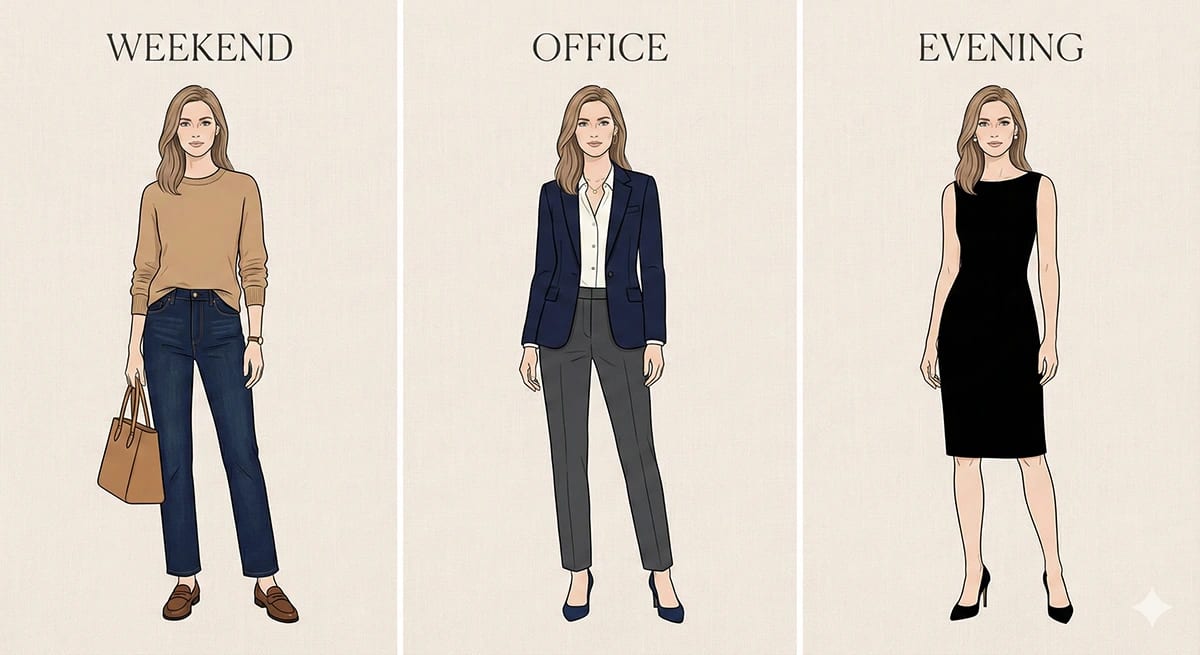
6. Classic Kibbe Outfit Ideas
Look 1: Weekend Polish
- The Piece: A quality cashmere crewneck sweater in camel or navy
- The Bottom: Classic-cut dark wash jeans with a straight leg
- The Shoes: Leather loafers or classic ballet flats
- The Touch: A structured leather tote and simple gold stud earrings
- Why it Works: Elevated casual that maintains your balanced proportions. Quality fabrics and clean lines create polish without effort.
Look 2: Office Excellence
- The Piece: A tailored blazer in charcoal or navy wool
- The Base: A crisp white button-down shirt or silk blouse
- The Bottom: Tailored trousers with a clean, straight leg
- The Shoes: Classic leather pumps with moderate heel
- Why it Works: Professional elegance at its finest. Every piece is balanced, quality-focused, and timelessly sophisticated.
Look 3: Evening Elegance
- The Piece: A beautifully tailored sheath dress in black or deep jewel tone
- The Details: Modest neckline, knee-length hem, clean lines throughout
- The Shoes: Classic pointed-toe heels in matching or neutral leather
- The Accessories: Pearl earrings or simple diamond studs, a quality watch
- Why it Works: Timeless sophistication that never dates. The sheath silhouette is the quintessential Classic dress—refined, balanced, and elegant.
7. Accessories, Hair & Makeup for the Classic
Jewelry
Think refined, quality, and timeless.
- Styles: Classic pearls, simple gold or silver, refined diamond pieces, elegant watches
- Scale: Moderate—not too delicate, not too chunky
- Textures: Smooth, polished metals, quality gemstones
- Avoid: Chunky statement pieces, overly trendy jewelry, cheap or costume-looking pieces
Hair
Your hair should enhance your balanced, refined essence.
- Styles: Polished waves, sleek bobs, classic blowouts, elegant updos
- Length: Any length works—the key is polish and refinement
- Color: Rich, uniform tones—subtle highlights if any, avoiding extreme color changes
- Avoid: Messy, undone styles, extreme cuts, trendy or avant-garde hair
Makeup
Keep it polished, balanced, and timeless.
- Focus: Even, refined application—nothing extreme or dramatic
- Colors: Classic reds, neutral lips, defined but not harsh eyes
- Finish: Polished and put-together—not overly matte or overly dewy
- Avoid: Heavy contouring, extreme colors, trendy makeup techniques, overly natural "no makeup" looks
FAQ: Classic Kibbe Body Type Styling Questions
Can a Classic wear black? ▼
What colors work best for Classics? ▼
How is Classic different from Dramatic Classic? ▼
Can Classics wear casual clothes? ▼
What if I'm between Classic and Soft Classic? ▼
Embrace Your Timeless Balance
Dressing as a Classic isn't about being boring or playing it safe. It's about honoring the rare gift of perfect balance and proportion. When you stop trying to be dramatic, edgy, or trendy and instead lean into timeless, refined elegance, your style becomes effortlessly sophisticated.
The Classic essence is all about quiet confidence—you don't need to shout with your clothes. Quality speaks for itself. Balance is inherently beautiful. And timeless elegance never goes out of style.
Next Steps:
Still not 100% sure you're a Classic? Many people initially confuse Classic with Dramatic Classic, Soft Classic, or even Natural types. The quiz helps narrow this down objectively by analyzing your bone structure, features, and overall proportion.
- Confirm your type: Take the free Kibbe body type quiz
- Deep dive: Explore the full Classic type profile
- Compare types: See Classic vs similar types
- Get inspired: Browse Classic style guides for more outfit ideas